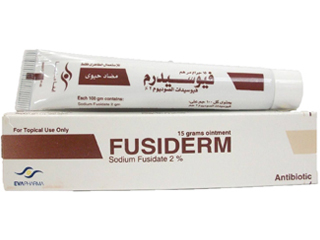
Fusiderm B (Betamethasone + Fusidic Acid) — Patient Guide (UK)
Fusiderm B is a combination medicine used for certain skin infections where there is also significant inflammation. It contains:
- Fusidic acid — an antibiotic to treat bacterial infection.
- Betamethasone — a corticosteroid to reduce redness, swelling and itch.
This page explains how Fusiderm B works, what it is used for, how to apply it safely, and what to consider in everyday life in the United Kingdom.
Basic product information
- Medicine name: Fusiderm B
- Active ingredients: Betamethasone + Fusidic acid
- Medicinal form: Cream or ointment (product strength and form can vary by pack)
- Type: Combination topical antibiotic + topical corticosteroid
- Who it is for: Adults and children (depending on age and local advice)
- Where it is used: On the skin only
Always follow the directions supplied with your particular pack and the advice of your pharmacist or prescriber. If you are unsure which skin problem you have, speak to a healthcare professional before using Fusiderm B.
How Fusiderm B works (mechanism of action)
Fusiderm B combines two medicines that act in different ways:
- Fusidic acid (antibiotic action): Fusidic acid targets the bacterial machinery required for protein production. This helps stop the bacteria from multiplying, reducing the infection and helping the skin heal.
- Betamethasone (anti-inflammatory action): Betamethasone is a corticosteroid. It reduces the inflammatory response that causes swelling, redness, heat and itching.
Because the product treats both infection and inflammation, it is sometimes used when bacterial infection presents with marked irritation or inflammation.
Typical use in the UK
Fusiderm B is used for localized skin infections where inflammation is also present. In the UK, it is commonly associated with conditions such as:
- Infected eczema (eczema with secondary bacterial infection)
- Infected dermatitis where a bacterial cause is suspected
- Other skin conditions that involve both infection and inflammation, as advised by a clinician
If you are not sure whether your rash is infected (for example, if there is no oozing, crusting, worsening pain, or spreading), it is safer to seek advice rather than use an antibiotic-steroid combination.
Timing and how to apply
Dosing schedules can vary based on the specific product strength and the area of skin affected. Follow your pack instructions. Typical guidance for topical combination products includes:
- Frequency: Usually applied once or twice daily depending on the product and condition.
- Duration: Often short-term. If there is no improvement within a few days, seek medical advice rather than continuing indefinitely.
- Amount: Apply a thin layer to the affected area.
Practical step-by-step application
- Wash and dry the affected area gently.
- Wash your hands before applying (and after, unless your hands are the treated area).
- Apply a thin layer of Fusiderm B to the affected skin.
- Do not cover with tight dressings unless specifically advised.
- Allow the cream/ointment to absorb before putting on clothing.
When to stop and seek advice: If the rash spreads, becomes more painful, you develop fever, the skin becomes markedly worse, or you see no improvement within the expected timeframe, stop using it and seek advice.
Food interactions
Fusiderm B is a topical medicine. Systemic absorption through intact skin is generally low. As a result, food interactions are not usually expected.
Nonetheless, it can be helpful to mention all medicines you use to your pharmacist, especially if you are applying Fusiderm B to large areas or under occlusive dressings, where absorption may be higher.
Alcohol and medicine interactions
Alcohol: No specific interaction between alcohol and Fusiderm B is commonly reported because the product acts on the skin. If you experience skin irritation or worsening during treatment, reduce triggers and seek advice.
Other medicines: Topical medicines can still interact, particularly if they increase steroid absorption. Tell your healthcare professional if you are using:
- Other creams/ointments for the same area (especially other steroids or antibiotics)
- Medicines that affect the immune system
- Frequent occlusive dressings or treatments that thin the skin
Avoid applying Fusiderm B at the same time as other topical products on the same area unless advised. If you need to use another product (e.g., an emollient), consider applying it at a different time of day.
Indications (when it may be suitable)
Fusiderm B is indicated for skin infections with inflammation where an antibiotic-steroid combination is appropriate. It is not intended for every rash.
Do not use Fusiderm B if you suspect the cause may be:
- Fungal skin infections (e.g., ringworm/tinea, thrush-like rash on skin)
- Viral skin infections (e.g., herpes simplex, varicella/chickenpox)
- Rosacea or perioral dermatitis (steroid can worsen these)
- Acne or other acneiform eruptions
If you’re unsure, ask a pharmacist or clinician. Choosing the right treatment matters because steroid-containing products can mask symptoms and allow infections to worsen.
How dosing typically works
Follow the instructions on your pack. In general, topical dosing aims to treat the smallest effective area for the shortest necessary time.
| Factor | Typical guidance |
|---|---|
| Application area | Apply only to the affected skin area. |
| Frequency | Often once or twice daily (varies by condition and product). |
| Amount | A thin layer is usually sufficient; avoid excessive quantities. |
| Duration | Short-term use. If no improvement is seen promptly, seek advice. |
| Children | Use only as directed for age and condition; extra caution is needed. |
| Occlusion | Avoid occlusive dressings unless specifically advised by a clinician. |
Do not use longer than advised. Overuse of topical corticosteroids can lead to skin thinning and other side effects. Overuse of antibiotics can increase the risk of antibiotic resistance.
Pharmacokinetics (what happens in the body)
When applied to skin, absorption of betamethasone and fusidic acid depends on:
- Skin integrity (intact vs broken skin)
- Area treated (larger areas absorb more)
- Duration of use
- Use of occlusion or covering the treated area
- Condition of the skin (inflammation can increase penetration)
In typical use on small, localized areas, systemic absorption is usually limited. If used on large areas, under occlusion, or for long periods, systemic absorption may increase, raising the potential for steroid-related effects.
Metabolism and elimination: Corticosteroids absorbed systemically are metabolised in the liver and excreted in urine and bile. Antibiotic absorption (if any) may follow distribution and elimination pathways typical of such medicines. In practice, because absorption is generally low when used properly, these processes usually have limited clinical impact.
If you need to treat a large area, treat broken skin, or use the product in infants/children, seek professional guidance.
Safety profile and side effects
Like all medicines, Fusiderm B can cause side effects. Many people have no problems, but it’s important to know what to watch for.
Common side effects
- Local skin irritation (stinging, burning)
- Redness or increased irritation at the application site
- Dryness or changes in skin feel
Serious or urgent side effects (seek advice promptly)
- Signs of allergy: swelling of the face/lips, widespread rash, wheezing, or breathing difficulty
- Worsening infection: rapid spread, severe pain, pus, fever
- Skin thinning or marked changes after repeated or prolonged use
Risks associated with betamethasone (steroid)
Steroids can affect the skin and, when absorbed, the whole body. Risk is higher with long-term use, large areas, children, broken skin, or occlusion.
- Skin thinning (atrophy)
- Stretch marks
- Changes in skin colour
- Increased susceptibility to skin infections (steroid can reduce immune response)
- Perioral dermatitis or acne-like rash (especially on the face)
Risks associated with fusidic acid (antibiotic)
- Antibiotic resistance may develop if antibiotics are used unnecessarily or for too long.
- Contact sensitisation (rare) — sensitivity to fusidic acid can occur, causing dermatitis.
Contraindications and when to be cautious
Do not use Fusiderm B on certain types of skin conditions unless specifically advised by a clinician. In particular, be cautious if you have:
- Suspected fungal or viral infections
- Skin lesions around eyes or on the face (steroids can be risky in these areas)
- History of sensitivity to fusidic acid or corticosteroids
- Large open wounds or extensive broken skin
Extra care is needed for children, and during pregnancy and breastfeeding. Seek professional advice for suitability and safe duration.
Practical use tips (to get the best results safely)
- Use the smallest effective amount: A thin layer reduces steroid exposure and irritation.
- Apply consistently: Missed doses can slow healing.
- Wash hands before and after: Helps prevent accidental transfer to eyes or other body areas.
- Avoid the eyes, mouth and genitals unless specifically instructed.
- Don’t cover unless advised: Occlusive dressings increase absorption and side effects.
- Keep the area clean: Gentle cleansing and pat-drying can help.
- Do not share: This medicine is for your specific skin condition.
If your skin is very dry, you may need an emollient. Ask your pharmacist how to schedule it alongside Fusiderm B. Infected eczema often benefits from moisturisers, but avoid mixing products directly unless instructed.
Alternative options (depending on the cause)
The “right” alternative depends on whether the problem is infection, inflammation, fungus, or a non-infective flare. Examples include:
- Topical corticosteroid alone (if infection has been ruled out)
- Topical antibiotic alone (for bacterial infection without significant steroid need)
- Antifungal creams (if the rash is fungal)
- Antiseptic or wound-care products (for certain minor infected lesions)
- Non-steroid anti-inflammatory skin treatments (for longer-term management of eczema in some cases)
- Emollients and moisturisers (for eczema support and barrier repair)
Because steroid-containing antibiotic combinations are not appropriate for every rash, consider getting a diagnosis if symptoms persist or recur.
Market and legal context in the UK
In the United Kingdom, topical medicines that contain antibiotics and corticosteroids are regulated to support safe and appropriate use. Fusiderm B is marketed and supplied in line with UK medicines regulations and pharmacy supply practices.
Availability can vary by:
- Whether the pack is branded or generic
- The form (cream vs ointment)
- Local pharmacy stock levels and supplier lead times
UK healthcare practice increasingly emphasises antibiotic stewardship — using antibiotics only when needed, for the correct duration, and avoiding unnecessary use that could contribute to resistance.
Recent guidance and stewardship considerations
UK public health messaging and clinical guidance have continued to highlight:
- Antibiotics should not be used for rashes unless bacterial infection is likely. Steroid-containing products can temporarily reduce symptoms and delay correct treatment.
- Short courses and review: if there is no improvement within the expected period, reassessment is recommended.
- Resistance risk: fusidic acid resistance is a known issue globally, so use should be targeted and time-limited.
If your symptoms are severe, spreading, or recurrent, ask a clinician whether culture tests or alternative treatments are needed.
Delivery and availability (UK online pharmacy)
Fusiderm B may be available from UK online pharmacies depending on current stock and product supply. Delivery timelines vary, but many UK pharmacies provide options such as:
- Standard delivery (typically a few working days)
- Next-day or express delivery in selected postcodes
- Warehouse dispatch cut-off times (often dependent on order timing)
When ordering, check:
- Product form (cream vs ointment) and strength
- Pack size
- Recommended storage (typically at room temperature, away from heat and direct sunlight)
- Delivery address and age requirements for certain medicines where applicable
If you have urgent symptoms, consider seeking local advice rather than waiting for delivery.
FAQ
1) What is Fusiderm B used for?
Fusiderm B is used on the skin for certain bacterial skin infections where there is also significant inflammation such as redness and itch (for example, infected eczema). It should not be used for fungal or viral rashes.
2) How quickly should it work?
Many people notice improvement within a few days, but it depends on the condition and how severe it is. If there is no improvement within the expected timeframe (as advised on your pack) or it gets worse, you should seek medical advice.
3) Can I use Fusiderm B on my face?
It may not be suitable for all facial rashes. Steroids can worsen certain conditions (such as perioral dermatitis or acne-like eruptions). If the affected area is on the face, get professional advice first and use exactly as directed.
4) Is it safe to use on children?
It can be used in children only when appropriate and as advised for their age and the affected area. Children absorb steroids more easily than adults, so duration and area treated should be tightly controlled.
5) Can I cover the treated skin with a bandage or dressing?
Avoid occlusive dressings unless a clinician specifically advises it. Covering can increase absorption and the risk of side effects. If you need a dressing (e.g., to prevent scratching), ask a pharmacist for safe options.
6) What should I avoid while using Fusiderm B?
Avoid:
- Applying near the eyes and mucous membranes unless told to
- Using it on rashes likely to be fungal or viral
- Long-term or frequent repeated use without review
7) What if I accidentally use too much?
If you apply more than recommended to the skin, contact a pharmacist for advice. In case of accidental swallowing or severe symptoms, seek urgent medical help.
8) Can I use moisturisers or other skin products?
Often, you can use emollients alongside treatment, but avoid applying multiple products at the same time on the same area. A practical approach is to apply emollients at different times of day—confirm with your pharmacist.
9) Does Fusiderm B affect driving or operating machinery?
As a topical skin medicine, it typically does not affect driving or machinery use. If you experience unexpected symptoms (such as dizziness from other medicines), follow relevant advice.
10) When should I seek urgent medical help?
Seek urgent help if you develop signs of a serious allergic reaction (such as trouble breathing, swelling of the face/lips, widespread hives) or if infection rapidly worsens (spreading redness, fever, severe pain, or pus).
Summary
Fusiderm B combines fusidic acid (antibiotic) and betamethasone (anti-inflammatory steroid). It is intended for specific infected, inflamed skin conditions. Use it as directed, apply a thin layer, and avoid long-term use. If symptoms do not improve or the rash worsens, seek advice to confirm the diagnosis and prevent complications.