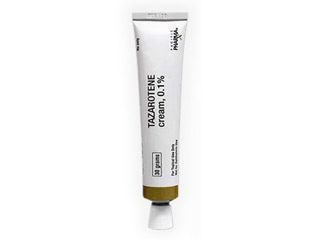
Tazorac (Tazarotene) – Patient Guide (UK)
Tazorac contains tazarotene, a retinoid medicine used to treat certain skin conditions. It works by helping normalise how skin cells grow and renew, reducing symptoms such as redness, thickening, and surface scaling. This guide explains what Tazorac is, how it works, how to use it, and key safety information—written for patients in the United Kingdom.
| Product name | Tazorac (tazarotene) |
|---|---|
| Active ingredient | Tazarotene |
| Medicine type | Topical retinoid (skin treatment) |
| Available forms (typical) | Cream and gel (strength depends on product) |
| Common uses | Plaque psoriasis; acne vulgaris (depending on strength/indication) |
| How it’s applied | Once daily (usually in the evening), thin layer |
| Main benefits | Reduces scaling/thickening; supports clearer-looking skin |
What is Tazorac?
Tazorac (tazarotene) is a medicine applied to the skin. It belongs to the group of retinoids—substances related to vitamin A. Retinoids are used because they influence how skin cells develop, mature, and renew.
Depending on the specific formulation and strength, Tazorac may be used for:
- Plaque psoriasis in adults (and sometimes other age groups, depending on local guidance and product licence).
- Acne vulgaris (typically for mild-to-moderate acne, depending on formulation/strength).
Important: Always check the specific product information you receive (strength, licensed indications, and directions of use).
How Tazorac works (mechanism of action)
Skin conditions like acne and psoriasis involve abnormal skin cell growth and inflammation. Tazarotene works mainly by:
- Normalising skin cell turnover (reducing excessive scaling and thickening).
- Reducing inflammation in the skin.
- Improving the appearance of lesions by influencing gene expression within skin cells (through retinoid receptors).
As a retinoid, tazarotene may also help prevent clogged pores (relevant for acne) and improve overall skin texture over time.
Pharmacokinetics (what the body does with tazarotene)
After applying Tazorac to the skin, only a small amount is expected to be absorbed compared with oral medicines. In most people, absorbed tazarotene is converted into its main metabolite(s), which are then eliminated by the body.
Key practical points:
- Topical absorption is typically limited, especially when used as directed and on appropriate areas.
- Metabolism occurs mainly in the liver after absorption.
- Elimination is through normal body processes, largely involving the kidneys and/or bile pathways for metabolites.
Factors that can affect absorption include:
- How much is applied (thin layer vs. larger amounts)
- The size of treated skin area
- How inflamed or damaged the skin is
- Whether it is covered with dressings or occluded (sealed)
- Use frequency and the product strength
Typical use and when you may see results
Tazorac is generally applied once daily, often in the evening, because retinoids can make skin more sensitive and because routine evening use supports consistent application.
When to expect improvement:
- Early changes: Some people notice reduced roughness or surface scaling within a few weeks.
- Clearer improvement: Often occurs after 4–8 weeks, depending on condition and skin reaction.
- Maximum effect: May take up to 12 weeks (or longer for psoriasis) to judge benefit fully.
Adaptation phase is normal. Mild irritation—especially in the first weeks—can occur. Your goal is to use Tazorac consistently while managing dryness and irritation.
How to use Tazorac (timing, application, and practical tips)
1) Choose the right timing
- Apply it at the same time each day.
- Evening use is common.
- Plan your routine so you can avoid applying extra products immediately afterward (unless moisturiser is recommended).
2) Apply a thin layer
- Wash hands before and after application.
- Apply a thin film to the affected skin only.
- Avoid eyes, lips, corners of the nose, and any broken or severely irritated skin.
3) Moisturising strategy (to reduce irritation)
Dryness and redness are among the most common side effects. Many patients find that:
- Using a gentle moisturiser can improve tolerance.
- Applying moisturiser after Tazorac once skin has absorbed (or on alternating days initially) may help.
4) Start gradually if your skin is sensitive
If you are prone to irritation, you may consider a gradual approach (for example, every other night at first) — but follow the product instructions and seek advice if unsure.
5) Sun protection is essential
- Use a broad-spectrum sunscreen (SPF 30+), especially on exposed areas.
- Wear protective clothing when appropriate.
Indications (what Tazorac is used for)
Indications can depend on the specific licensed product and strength. Commonly, tazarotene topical treatments are used for:
- Plaque psoriasis (improving scaling and thickness).
- Acne vulgaris (helping reduce comedones and inflammation).
Always refer to the patient leaflet for the exact indication relevant to your specific Tazorac product.
Dosing (how much to apply)
Dosing is usually described as once daily application to affected areas. Because strength and exact instructions can vary by formulation, the safest approach is to follow the leaflet included with your product.
General dosing principles:
- Use a thin layer—more is not better and may increase side effects.
- Apply to affected areas only, unless otherwise instructed.
- If you miss a dose, apply it when you remember unless it is close to the next dose. In that case, skip the missed dose and continue your routine.
Covering treated skin: Avoid tightly occluding the treated area unless advised, as occlusion can increase absorption and irritation.
Food interactions
As a topical medicine, Tazorac is not expected to have direct food interactions. There is no known requirement to adjust meals around topical application.
However, if you are using other systemic medicines, it is still wise to discuss your full medication list with a healthcare professional if you have concerns.
Alcohol and medicine interactions
There are no specific alcohol restrictions linked to topical tazarotene. Alcohol may indirectly affect skin health (e.g., dehydration or irritation) in some individuals, but there is no universal interaction.
Medicine interactions:
- Other topical irritants (such as strong exfoliants, medicated acne products that dry the skin aggressively, or products containing alcohol/strong fragrances) may increase irritation when used together.
- Combining with other retinoids or vitamin A–containing products may increase dryness and irritation.
- Tell your pharmacist or clinician about any prescription or over-the-counter skin products you use regularly.
Safety profile (side effects and when to get help)
Common side effects
These are often related to skin irritation and typically occur more frequently during the first weeks:
- Dryness
- Redness (erythema)
- Burning or stinging
- Peeling or flaking
- Itching
Less common effects
- Skin discomfort that may require reduced frequency or temporary changes in routine.
- Changes in skin colour (temporary pigmentation changes may occur with irritation).
Serious or urgent symptoms
Seek medical advice promptly if you experience:
- Severe swelling, intense blistering, or a rapidly spreading rash
- Signs of an allergic reaction (e.g., facial swelling, difficulty breathing)
- Severe worsening of pain or widespread blistering/skin damage
Special precautions
- Pregnancy and conception: Retinoids are generally avoided in pregnancy due to potential risks to the unborn baby. If pregnancy is possible or you are trying to conceive, discuss safe options with a clinician before using tazarotene.
- Breastfeeding: Discuss with a healthcare professional. Avoid applying to areas that could come into contact with an infant’s skin.
- Skin sensitivity: Do not apply to eczema flares or open wounds unless advised.
- Care with sun exposure: Increased sensitivity may occur. Use sunscreen and protective measures.
Practical use tips (to improve comfort and results)
- Use the “pea-sized” concept: For small areas, a small amount often spreads far enough.
- Avoid washing right before application with harsh cleansers; gently cleanse and let skin dry before applying.
- Do not combine with harsh actives at the same time initially (e.g., strong scrubs, exfoliating acids, or alcohol-based toners), unless you know your skin tolerates them.
- Be consistent: Uneven use can reduce benefits and may prolong irritation.
- Adjust frequency if needed: If irritation is significant, consider reducing frequency (e.g., every other night) while speaking to a pharmacist/clinician for tailored advice.
- Keep it away from the corners of the nose and eyes, where irritation is more likely.
Alternative options (if Tazorac isn’t suitable)
If you cannot tolerate tazarotene or if your condition needs a different approach, there are several alternatives. The best choice depends on your diagnosis, severity, and skin sensitivity.
For acne
- Topical retinoids such as adapalene or tretinoin (availability/indication varies).
- Benzoyl peroxide (often combined with retinoids to reduce resistance and inflammation).
- Topical antibiotics in selected cases (usually short-term and guided by clinician advice).
- Oral treatments for moderate-to-severe acne (e.g., certain hormonal therapies or oral antibiotics where appropriate).
For plaque psoriasis
- Topical corticosteroids (often used for flares and to reduce inflammation).
- Vitamin D analogues such as calcipotriol (depending on suitability).
- Emollients/moisturisers to reduce dryness and scaling.
- Phototherapy or systemic options for more extensive disease (managed by dermatology).
Online pharmacies can often supply compatible moisturisers and complementary products, but your treatment plan should be individualised.
UK market and legal context (overview)
In the United Kingdom, topical retinoid products may be classified differently depending on strength and the product licence. Many acne and psoriasis treatments are available through pharmacies, and some may be provided via clinician assessment depending on the medicine and local prescribing pathways.
Patient information leaflets in the UK are designed to cover:
- Licensed indications and age groups
- How to apply and the maximum duration/frequency
- Key warnings, including pregnancy-related precautions
- Common adverse effects and what to do if they occur
Always check the leaflet that comes with your specific Tazorac product for the UK-approved details.
Recent guidance and practical considerations
Across dermatology practice, guidance tends to emphasise the following for topical retinoids:
- Gradual introduction to reduce irritation and improve adherence.
- Consistent sun protection during treatment.
- Skin-barrier support (gentle cleansing and moisturisers) to reduce dryness and peeling.
- Appropriate combination use—some actives may be too irritating when used together, while others can be beneficial when tolerated.
Because guidance can update and products/strengths vary, it’s wise to follow the instructions printed for your exact product and seek advice if you experience unexpected reactions or worsening symptoms.
Delivery and availability (UK)
Availability can vary depending on pharmacy stock and the exact strength/formulation (cream vs gel). When ordering online in the UK, delivery timing depends on:
- Stock status (same-day dispatch may be possible when in stock)
- Standard vs tracked delivery options
- Public holidays and local carrier schedules
When you order, your pharmacy should provide:
- Clear details of the product strength and form
- Expected delivery times
- Storage guidance (typically at controlled room temperature, away from heat and sunlight)
- Patient information and instructions for use
Frequently Asked Questions (FAQ)
1) How long does Tazorac take to work?
Many people notice improvement within 4–8 weeks, while maximum benefit may take up to 12 weeks depending on the condition and how your skin responds. Mild irritation early on can be part of adapting.
2) Can I use Tazorac every day?
It is usually applied once daily, but if you get significant irritation, you may need a slower ramp-up approach. Use the leaflet directions and seek pharmacist advice for a plan that suits your skin.
3) What if my skin becomes very red or painful?
Stop and seek advice if you have severe burning, blistering, swelling, or spreading rash. For bothersome but manageable irritation, you may be able to reduce frequency and increase moisturising—confirm with a healthcare professional.
4) Can I wash my face after applying?
You should follow the product leaflet. Generally, you apply to clean, dry skin and allow it to absorb. Washing immediately after can reduce effectiveness. If you need to cleanse (e.g., if you missed an area), do so gently and avoid harsh scrubs.
5) Can I use moisturiser with Tazorac?
Often yes. Many patients improve comfort by using moisturiser after applying tazarotene once it has absorbed, or by moisturising on non-application nights. Choose gentle, fragrance-free products if possible.
6) Is it safe to use on the whole face?
Sometimes it is used on affected areas; however, if irritation occurs, you may need to limit to problem areas initially. The leaflet and your clinician/pharmacist guidance should be followed for your specific condition.
7) Does Tazorac stain clothes or bedding?
Topical retinoid products may leave residue. Allow the medicine to dry completely before dressing or lying down, and consider using old pillowcases until you know how your skin and the formulation behave.
8) Can I use it with other acne treatments?
Some combinations are possible, but others can be too irritating. Avoid combining with other strong or exfoliating products at the same time unless recommended. Ask your pharmacist about your current routine.
9) What should I do if I miss a dose?
Apply it when you remember unless it’s close to the next dose. Then skip the missed one and continue. Do not apply extra product to catch up.
10) Are there pregnancy concerns?
Yes. Retinoids are generally avoided in pregnancy due to potential risks. If you are pregnant, planning pregnancy, or could become pregnant, discuss safe treatment options with a healthcare professional before using tazarotene.
Disclaimer: This information is provided for general patient education and does not replace the patient leaflet supplied with your specific medicine or personalised advice from a pharmacist/clinician. Always follow the instructions for your exact Tazorac product.